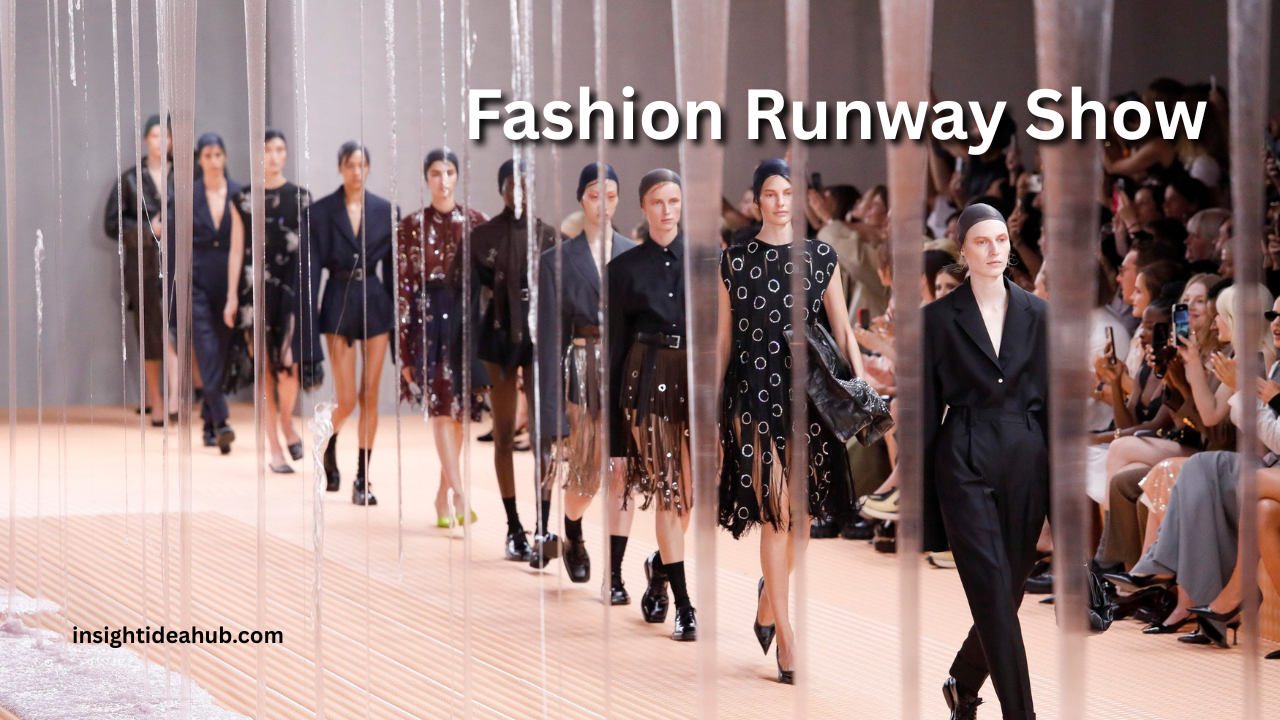
I still remember the first time I watched a fashion runway show on television. I was maybe twelve years old, sitting cross-legged on the living room floor, completely mesmerized. The lights, the music, the way each fashion model glided down that long stretch of floor like they owned every inch of it. Something about it felt electric. Bigger than life. I did not understand fashion back then, not really, but I understood that what I was watching was art in motion.
That feeling never left me. And over the years, as I dug deeper into the world of style, design, and creative performance, I realized the fashion runway show is so much more than just pretty clothes on pretty people. It is a cultural moment. A statement. A story being told without a single word spoken.
What Exactly Is a Fashion Runway Show
At its core, a fashion runway show is a live presentation where designers showcase their latest seasonal clothing collections to an audience. That audience typically includes fashion editors, buyers, celebrities, influencers, and journalists. The setting is theatrical. The lighting is deliberate. Every detail, from the music to the set design to the order in which each look appears, is carefully planned.
Think of it like a movie premiere, but instead of a film, the product is a wearable vision of the future. Designers spend months, sometimes an entire year, preparing for a single show that might last only fifteen to twenty minutes. That ratio alone tells you everything about how seriously this world takes presentation.
The most famous fashion runway shows happen during Fashion Week events held in four major cities: New York, London, Milan, and Paris. These are the holy grails of the industry. Getting a front row seat at Paris Fashion Week is roughly equivalent to a sports fan getting courtside seats at a championship game. The energy is unmatched.
The Role of the Fashion Model: More Than Just a Walking Hanger
Let me be honest about something. For a long time, I thought the fashion model was just there to display the clothes. A human mannequin, basically. I was wrong.
A truly skilled fashion model is a performer. They understand body language, rhythm, and presence. The way a model carries a garment can completely change how that garment is perceived. A slouched walk makes even a masterpiece look sloppy. A confident, intentional stride transforms a simple piece into something iconic.
Models study their walk the way athletes study their form. They practice posture, timing, and facial expression. Some work with coaches. Others spend years developing their signature style. When you watch a top fashion model on the runway, you are watching someone who has mastered the performance of movement.
There is also a growing conversation in the industry about diversity and representation on the runway. For many years, the standard was narrow, almost exclusionary. But that has been shifting. More brands now cast models of varying sizes, ethnicities, ages, and backgrounds. This is not just progress on a social level. It actually makes the shows more interesting. More human. More relatable to the people who actually buy clothes.
The Design Journey: From Sketchbook to Catwalk
Here is something that blows my mind every time I think about it. The clothes you see during a seasonal fashion week presentation did not just appear. They started as rough sketches in a notebook, often drawn at two in the morning when an idea would not let a designer sleep.
From sketch, a design moves to fabric sourcing. Designers travel the world looking for the right materials. Italian silk. Japanese denim. Hand-embroidered textiles from artisan communities. Then come the pattern makers, the seamstresses, the tailors, the fit models who try on early versions so adjustments can be made.
By the time a garment reaches the runway, it has passed through dozens of hands and hundreds of decisions. Every button, every seam, every color choice has been debated. This is why the phrase haute couture presentation carries such weight. It is not just fashion. It is craftsmanship elevated to its highest form.
I once read about a designer who remade a single jacket seven times before she was satisfied. Seven versions, each one slightly different, each one a conversation between her vision and the physical reality of fabric and form. That level of dedication is humbling.
Showbiz and the Runway: Where Performance Takes Center Stage
Something fascinating has been happening in recent years. The line between a fashion runway show and a full-blown entertainment production has all but disappeared. Today’s luxury brand presentations are as much showbiz as they are style.
Showbiz dance elements have crept into runway presentations in the most spectacular ways. Some designers open their shows with live musical performances. Others hire choreographers to create movement sequences that complement the clothing. The result is something closer to a theatrical experience than a traditional catwalk.
Showbiz studios have become regular collaborators with high fashion houses. Production companies that typically work on music videos and award show performances now help design the staging, lighting rigs, and visual effects for major runway events. The technical infrastructure behind a top-tier fashion show rivals anything you would see at a concert.
This crossover has also created space for showbiz talent dance competition alumni to find work in fashion. Dancers who built their skills and visibility through competitions are now walking runways, performing at brand events, and appearing in campaign shoots. The worlds of fashion and performance have always been neighbors. They are now practically roommates.
Showbiz Dance Competition Culture and Its Fashion Connection
If you have ever watched a showbiz talent dance competition, you already understand the visual language of fashion performance. The costumes. The staging. The way lighting can transform a performer into something otherworldly.
Showbiz dance culture has always been deeply intertwined with fashion. Competition costumes are often elaborate, heavily embellished, and designed to command attention from a distance. They need to read clearly under stage lights, hold up through intense physical movement, and tell a story about the performance at a glance. Sound familiar? That is exactly what runway clothing needs to do.
Showbiz dance competitions also train performers in something that fashion desperately values: the ability to own a space. When a dancer walks onto a stage, they have seconds to establish their presence before a single step is taken. Fashion models face the exact same challenge the moment they step through the curtain at the top of the runway. The training is different, but the core skill is identical.
I have a friend who competed in showbiz dance competitions throughout her teens. She eventually transitioned into modeling. She told me the competition experience was more relevant to runway work than any modeling class she ever took. She already knew how to perform under pressure, how to make movement intentional, and how to connect with an audience across a distance. The runway just gave her a new stage.
Backstage: The Controlled Chaos Nobody Sees
The public sees the polished fifteen minutes. What happens backstage is something else entirely.
In the final hour before a fashion runway show begins, the backstage area is controlled chaos. Hairstylists and makeup artists work on multiple models simultaneously. Dressers stand with garments ready, rehearsing the sequence of outfit changes that need to happen in seconds. Designers pace, check their phones, fix a collar, second-guess a shoe choice, and then fix the collar again.
There are mood boards taped to walls. There are racks of clothing organized by look number, each tagged and color-coded. There are safety pins everywhere because safety pins are the universal currency of the fashion world.
And somehow, through all of that beautiful disorder, when the music starts and the first model steps out, everything looks flawless. That transformation from backstage chaos to runway perfection is itself a kind of magic trick. One of my favorite ones.
How a Fashion Runway Show Shapes Global Style Trends
Here is the practical side of all this spectacle. What happens on the runway directly influences what you will find in stores six to twelve months later. Designers are not just showing art for art’s sake. They are setting the direction for an entire industry.
When a designer sends a certain silhouette down the runway, buyers take note. When a color appears across multiple collections during the same season, trend forecasters declare it the color of the season. When an accessory keeps appearing, it becomes a must-have. The runway is essentially a very expensive, very glamorous announcement about what comes next in fashion.
This influence filters down quickly. Luxury houses set the tone. Contemporary brands interpret those trends at accessible price points. Fast fashion brands move even faster, sometimes getting trend-inspired pieces to market within weeks of a runway show. Like it or not, the catwalk shapes what hangs in closets around the world.
Frequently Asked Questions
What is the main purpose of a fashion runway show?
The primary purpose is for designers to present their latest collections to industry professionals, press, and buyers. It is both a business presentation and a creative performance.
How do models walking the runway prepare for a show?
Models typically attend fittings weeks in advance and do a full rehearsal the day before the show. They practice their walk, learn the sequence of looks, and coordinate with dressers backstage.
What is the difference between haute couture and ready to wear runway shows?
Haute couture refers to custom, handmade pieces created for individual clients at very high price points. Ready to wear collections are designed for production and sold through retail. Both are presented on the runway but serve different commercial purposes.
How has showbiz dance influenced modern runway presentations?
Many designers now incorporate choreography, live performance, and elaborate staging into their shows. This has created exciting crossover opportunities between fashion and the broader world of showbiz dance and entertainment production.
Can someone attend a fashion week runway show without industry connections?
Most runway shows during Fashion Week are invitation-only. However, some brands now livestream their presentations, and certain events open limited public ticketing for select shows.
Final Thoughts: Why the Runway Still Matters
We live in a world saturated with digital content. You can scroll through thousands of outfit images in an hour. You can watch fashion influencers on every platform imaginable. So why does the live fashion runway show still matter?
Because nothing replaces the experience of watching something happen in real time, in real space, with real stakes. The runway is where designers take their biggest creative risks. It is where fashion models earn their reputations. It is where the showbiz energy of performance meets the craft of clothing design in a way that simply cannot be replicated on a screen.
Every season, I still find myself watching runway coverage with the same feeling I had as that twelve-year-old on the living room floor. A little breathless. A little in awe. Wondering what the next look through the curtain will bring.
That is the power of the fashion runway show. It has always been, and will always be, something worth watching.